The ReGeneration Rising podcast, by RSA Oceania, explores regenerative approaches to redesigning communities, cities, and economies, fostering a thriving planet. Hosted by Dr Daniel Christian Wahl, it features renowned guests across two insightful series.
ReGeneration RisingThis resource from the Australian Indigenous Governance Institute (AIGI) examines the significance of relationships in First Nations governance. It covers cultural, community, and environmental connections, balancing roles, building trust, and fostering effective partnerships. The guide also explores allyship, network expansion, and practical strategies for creating balanced, respectful collaborations within Indigenous communities and beyond.
RelationshipsRemarkable Insights Podcast
The Remarkable Insights Podcast by Remarkable explores how disability drives innovation, featuring global pioneers in assistive tech and inclusive design. Hosted by Viv Mullan, each episode reveals how lived experience and creativity shape business, technology and social change
Remarkable Insights PodcastResourcing First Nations Enterprises: Insights from a Social Enterprise Development Learning Community
This report from the First Nations Projects Institute captures 25 First Nations contributors' experiences of funding systems. It finds that current funding models are scarce, complex and often misaligned with First Nations ways of working.
Resourcing First Nations Enterprises: Insights from a Social Enterprise Development Learning CommunityRiding the Tech Wave: How Charities Can Positively Engage with the Innovation Generation
This article highlights how charities can connect with a new generation of tech founders who are becoming major donors in Australia. Drawing on the Australian Tech Giving Report, it explains how tech wealth is growing, why tech givers give differently, and how not-for-profits can adapt to engage them.
Riding the Tech Wave: How Charities Can Positively Engage with the Innovation GenerationRoadmap to Social Impact - CSI
This thorough resource from Centre for Social Impact is a step by step guide to support you and your organisation through the process of outcomes measurement and evaluation.
Roadmap to Social Impact - CSIRural and Remote Funding to Deliver Social Impact
Sefa Partnerships convened a webinar exploring how funding for social impact is designed, delivered and experienced across rural and remote Australia. Drawing on a peer learning community of funders and impact leaders, the session shared insights on obstacles and opportunities to increase the flow of funding across Australia’s diverse geographies.
Rural and Remote Funding to Deliver Social ImpactSafeWork Australia offers resources for workplace health and safety, including psychosocial safety. Black Dog Institute supports mental health with free NSW training. Local SafeWork bodies, like SafeWork NSW, also provide helpful resources.
SafeWork AustraliaSeedkit is a national project and online platform that helps social enterprises measure and share their impact. It allows organisations to track their work and results using simple dashboards and reports that can be customised to their needs.
SeedkitThe Seed to Table podcast explores the stories of Australians working to revitalise our food and farming systems.
Seed to TableSelf-determination for Aboriginal and Torres Strait Islander peoples
Self-determination is vital to the governance and aspirations of Aboriginal and Torres Strait Islander peoples, enabling them to lead decision-making, exercise sovereignty, and build community-driven governance systems. This toolkit section outlines principles, pathways, and practical steps toward self-determination, including nation building, treaty processes, and sustainable development.
Self-determination for Aboriginal and Torres Strait Islander peoplesSensing The Third Horizon
This report, published by Arising Quo, explores how funders and wealth holders can better recognise and support transformative social change. Drawing on interviews with practitioners, it proposes 13 capacities, like healing and unlearning, that can be added to popular systems change frameworks.
Sensing The Third HorizonService Design Tools: A Resource for Co-Creation and Innovation
Service Design Tools is an open-access platform offering methods and templates for designing user-centered services. With tools spanning research, ideation, and implementation, it supports collaboration and co-creation across diverse contexts like healthcare, education, and social innovation. Suitable for both beginners and experienced designers, the platform provides resources to facilitate inclusive and impactful service development.
Service Design Tools: A Resource for Co-Creation and InnovationSeven Transformations of Leadership
This framework categorises leadership into seven stages, from Opportunist to Alchemist, reflecting increasing complexity and transformative impact. Each stage highlights unique approaches to challenges, relationships, and organisational goals. Leaders can progress through feedback, self-reflection, and embracing new responsibilities, with growth beyond the Achiever stage requiring deep self-awareness and the ability to challenge assumptions. Teams led by Strategists are most adaptable, benefiting from diverse perspectives and innovation to navigate complex challenges and drive organisational transformation effectively.
Seven Transformations of LeadershipShaping and Fuelling Change
Shaping and Fuelling Change is a new national report examining the role of philanthropy in social enterprise. It calls for a shift, towards longer-term and more flexible approaches that support systems change.
Shaping and Fuelling ChangeShe Gives: Growing Women's Giving in Australia
This national research report from She Gives explores how women in Australia engage in giving and philanthropy. It highlights trends, motivations, barriers, and opportunities, offering insights for organisations seeking to better understand and engage women as donors and changemakers within the impact economy.
She Gives: Growing Women's Giving in AustraliaSilver Ball Social Innovations: Warrnambool
Silver Ball Social Innovations: Warrnambool is a new podcast commissioned by the Fletcher Jones Family Foundations. It spotlights six local social enterprises creating lasting community impact. Through uplifting and inspiring stories, the series showcases grassroots innovation, creativity and connection across Warrnambool’s social enterprise ecosystem.
Silver Ball Social Innovations: WarrnamboolThe SIMNA Resource Hub is a free online collection of guides, tools, case studies, webinars and reports focused on social impact measurement. Run by the Social Impact Measurement Network Australia, it covers everything from evaluation frameworks to outcome reporting. Useful for social enterprises, community organisations and funders wanting to measure and communicate their impact.
SIMNA Resource HubThis guide from Justice Connect helps social enterprises understand their legal responsibilities. It covers choosing a legal structure, setting up governance, meeting compliance requirements, and managing day-to-day operations. The guide supports organisations at different stages of development to make informed legal decisions.
Social enterprise guideSocial Enterprises: Unlocking life changing economic power
This booklet introduces social enterprise in a simple and practical way. It explains what social enterprises are, how they work, and why they matter. The resource also shares examples and guidance to help people understand how business can be used to create positive social impact.
Social Enterprises: Unlocking life changing economic powerSocial Investment Explained
Social Investment Explained is a practical guide that helps community groups and social enterprises understand different types of investment. Produced by the Big Lottery Fund, Social Enterprise UK (SEUK) and Social Spider, it explains funding options, investment readiness, and key questions to consider when preparing to seek investment.
Social Investment ExplainedSocial Investment Manual: An Introduction for Social Entrepreneurs
This manual provides practical advice for social entrepreneurs on working with social investors. It explains the investment landscape, how to find and approach investors and what to expect during due diligence. The guide also shares tips for building strong, long-term partnerships.
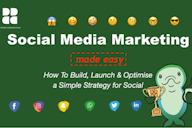
Social Investment Manual: An Introduction for Social EntrepreneursSocial media marketing made easy - video lesson and planner
This 40 minute video uses real life examples to share how to build, launch and optimise a simple social media strategy. It is a pragmatic guide for small organisations with limited resources and time-poor people wearing multiple hats.
Social media marketing made easy - video lesson and plannerSocial media templates, Hootsuite
It’s difficult to keep up with the latest trends in social media. Hootsuite regularly updates its advice and offers many free tools for planning and posting on social media. This page pulls together 35 different templates and while they won’t all be relevant to you there are some useful ones in there.
Social media templates, HootsuiteSocial procurement document library
This portal provides access to documents about Victoria’s Social Procurement Framework. It includes the framework, case studies, and guidance for buyers. The resources explain how the Victorian Government uses procurement to achieve social and sustainable outcomes, and help social enterprises understand how to work with government buyers.
Social procurement document librarySocial Procurement Fundamentals for Social Enterprises
This video tutorial explains social procurement and why it matters. It outlines the key drivers behind social procurement, how the Social Traders marketplace operates, and what social enterprises need to prepare in order to access contracts and opportunities through this growing market.
Social Procurement Fundamentals for Social EnterprisesSocial Shifters is an international charity that supports young people to become leaders, innovators, and entrepreneurs. It helps them tackle social and environmental problems in new ways. Their website offers online learning, videos, and downloadable tools to support people starting social enterprises.
Social Shifters LearningSocial Startup Studio is a program run by Swinburne University of Technology in Melbourne. It supports people who want to start and grow social enterprises. The website offers a wide range of practical resources to help social enterprise startups get started and develop their ideas.
Social Startup Studio'Space for Community: Strengthening our Social Infrastructure', Power to Change (2022)
This report by the British Academy and Power to Change examines how social infrastructure strengthens community resilience. It highlights key spaces, their role in fostering inclusivity, and policy recommendations for maintaining and enhancing social infrastructure.
'Space for Community: Strengthening our Social Infrastructure', Power to Change (2022)Startup Secrets: Go to Market Strategies
This long-form lecture from Harvard Innovation Labs explains how to plan a strong go-to-market strategy. It outlines key steps for launching a product or service, understanding customers, and choosing the right channels. Although designed for start-ups, the framework is useful for any organisation entering a market.
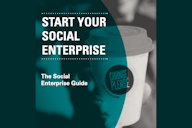
Startup Secrets: Go to Market StrategiesStart Your Social Enterprise
While not specifically about pitching, this comprehensive guide serves as an excellent resource for preparing a social enterprise pitch. Use it as a valuable checklist and preparation tool, to help organise your thoughts and information in a way that resonates with investors, partners or supporters.
Start Your Social Enterprise'Stories to save the world', Futerra
This resource explores the power of storytelling in addressing climate change - its underlying ideas can be applied to other areas of impact. It argues that while the science and technology for combating climate change exist, what's missing is the right story to motivate action.
'Stories to save the world', FuterraSTREAT’s Community of Practice (CoP)
The STREAT WISE Community of Practice is a peer learning community for practitioners working in Work Integration Social Enterprises (WISEs), which are organisations that create employment and training pathways for people facing barriers to work. It offers session summaries, practical tools, and shared resources from six national sessions.
STREAT’s Community of Practice (CoP)Support Convening and Coordination
This mini-guide, published by Regen Labs explores one strand of the WEAVE Framework: supporting convening and coordination. It argues place-based convenors, or weavers, provide essential social infrastructure for regenerative economic change, but remain underfunded and poorly understood.
Support Convening and CoordinationSupport for businesses in Australia
Business.gov.au offers a suite of practical guides for anyone thinking about starting a business in Australia. From testing your readiness to writing a business plan and choosing a legal structure, the resources cover the essential groundwork. Useful for first-time founders and social entrepreneurs in the early stages of planning.
Support for businesses in AustraliaSustainability Training Institute (STI) - Online Sustainability Masterclasses
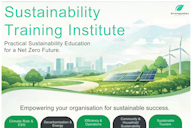
The Sustainability Training Institute (STI), delivered by Strategy&Ops Consultancy, offers a range of practical, self-paced online masterclasses designed to help organisations strengthen their sustainability knowledge, capability and impact.
Sustainability Training Institute (STI) - Online Sustainability MasterclassesSustainable Impact: How NFPs are building social enterprises that pay their way
This Social Traders report examines how not-for-profits build social enterprises that pay their own way. Drawing on four case studies, it finds strong leadership, strategic volunteer use and patient funding are key to success.
Sustainable Impact: How NFPs are building social enterprises that pay their waySustainable Table Regenerative Agriculture Food & Farming Map
Sustainable Table focuses on regenerating food and farming in Australia. This site shares a wealth of resources including Australia’s first Regenerative Food and Farming Map and ‘Regen 101’.
Sustainable Table Regenerative Agriculture Food & Farming MapSVA's 'Employer Innovation Lab'
The Employer Innovation Lab by Social Ventures Australia helps employers improve recruitment and retention by addressing barriers young people face in the workforce. Through a structured, collaborative program, businesses develop and scale inclusive employment strategies to create meaningful career pathways.
SVA's 'Employer Innovation Lab'Systemic Venture Building - How to create social ventures that can achieve transformative change
Systemic Venture Building explains how new businesses can be designed to change entire systems, not just solve isolated problems. Developed by Metabolic, this approach focuses on creating multiple, connected ventures that work together to shift industries like energy, food and materials towards long-term social and environmental impact.
Systemic Venture Building - How to create social ventures that can achieve transformative changeSystems Change Collective: Toolkit For Centering First Nations Storytelling
This toolkit from Common Ground helps social enterprises meaningfully embed First Nations storytelling and leadership. It argues that storytelling shapes systems and power, not just narrative, and offers three pillars for action.
Systems Change Collective: Toolkit For Centering First Nations StorytellingSystems Mindsets & Practice for Social Enterprise
This resource explores the importance of systems thinking in social enterprise, advocating for interconnected approaches to tackle complex challenges. It introduces key practices, including adopting pluralistic perspectives, fostering collaborative networks, and addressing systemic issues through targeted interventions. By focusing on relationships, complexity, and leverage points, social enterprises can drive meaningful change while balancing specific actions with broader systemic goals.
Systems Mindsets & Practice for Social EnterpriseTanya Egerton Interview – First Nations Enterprises and Cultural Heritage
This interview with Tanya Egerton explores how First Nations enterprises preserve heritage and culture for future generations. Tanya discusses the role of Indigenous-led businesses in protecting language, knowledge, art and connection to Country. The article highlights opportunities and challenges for Indigenous entrepreneurs and explains how cultural values guide economic activity. It helps readers understand why strong Indigenous enterprises support long-term community wellbeing.
Tanya Egerton Interview – First Nations Enterprises and Cultural HeritageTendering and Applying with Confidence: Two-part workshop series | workshop 2
QSEC and Gov Ready held an interactive webinar exploring how social enterprises can get procurement ready. They shared practical tools and strategies to help social enterprises prepare compelling applications, demonstrate value, and build long-term readiness for public sector opportunities.
Tendering and Applying with Confidence: Two-part workshop series | workshop 2T.E.S.T = Transformational Ethical Story Telling
Discover T.E.S.T., an anti-oppressive framework for ethical storytelling that prioritises the rights and needs of all individuals. T.E.S.T. empowers Story Holders to control their narratives while providing Story Caretakers with principles to ensure safe, ethical storytelling. Explore related resources, including guides and an ethical storytelling video, to deepen your understanding.
T.E.S.T = Transformational Ethical Story TellingThe amazing world of our thriving co-operatives, especially in the regions
Community-owned cooperatives are growing in regional Australia, particularly in Victoria, as innovative responses to market failures and threats to local businesses. By providing essential services and reinvesting profits locally, examples such as Yackandandah Community Development Company (YCDCo) and renewable energy projects demonstrate their impact. These models prioritise community ownership, resilience, and local economic benefits, yet are underrepresented in mainstream business education. The article examines their increasing adoption and potential to address community needs effectively.
The amazing world of our thriving co-operatives, especially in the regionsThe Announcement is a documentary podcast series hosted by Matt Barr that delves into Patagonia’s radical 2022 decision to make “Earth” its only shareholder, exploring legacy, purpose and capitalism’s evolving role.
The AnnouncementThe Australian Centre for Social Innovation (TACSI)
TACSI is a social innovation lab that supports organisations and communities in designing impactful solutions to complex social challenges. Using human-centred design and co-design methods, it provides toolkits, case studies, and frameworks to transform services in areas like ageing, mental health, housing, and disability.
The Australian Centre for Social Innovation (TACSI)This checklist, developed by STREAT's STREATwise team, helps people build, run or strengthen a Work Integration Social Enterprise (WISE). It offers a simple self-rating tool to map how a WISE is tracking across key areas, drawn from questions STREAT itself faced when starting out.
The AvocadoThe basics of customer journey mapping
Discover the basics of customer journey mapping—an end-to-end visualisation of your customers' experience. This article explains how journey mapping helps you understand customer needs, improve design processes, and boost satisfaction and loyalty. Learn its benefits, how to create a map, and use insights for better customer experiences.
The basics of customer journey mapping


.png?w=192)
.png?w=192)

 (10).png?w=192)

.png?w=192)


-2.png?w=192)

-24.png?w=192)
-1.png?w=192)

.png?w=192)
.png?w=192)
.png?w=192)
.png?w=192)
.png?w=192)
.png?w=192)
.png?w=192)
.png?w=192)
.png?w=192)

.png?w=192)
.png?w=192)

.png?w=192)
.png?w=192)
 (5).png?w=192)
.png?w=192)
.png?w=192)
, Our Rac-1.png?w=192)
.png?w=192)

.png?w=192)