28 Apr 2026
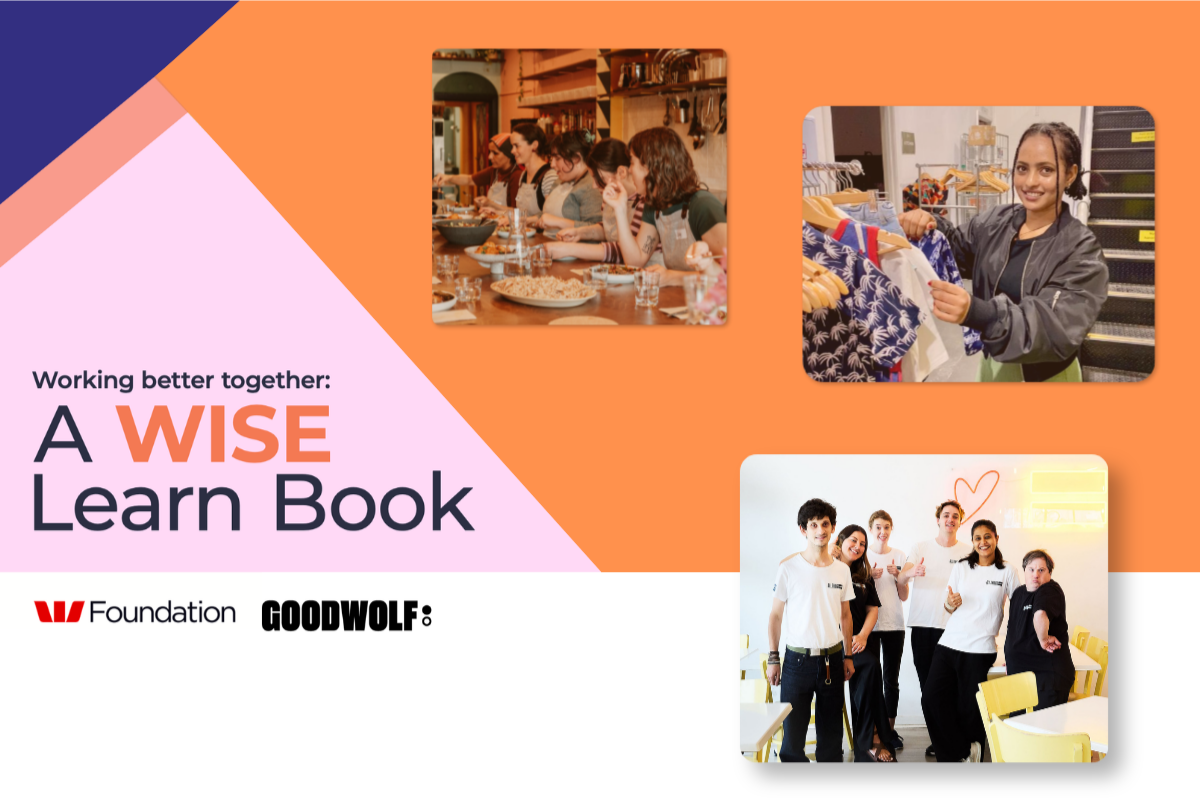
Free to Feed case study (page 6)
By Rosanne Hyland (Board Chair, Free to Feed) and Loretta Bolotin (Founder, Free to Feed)
Ten years of culturally safe, trauma-informed employment for refugees ended in closure. Free to Feed's founder and board chair speak honestly about why, as a work integration social enterprise (WISE), impact costs and trade income are in permanent tension, and what that meant when funding fell short.
View resourceSummary
Melbourne-based Free to Feed began as a simple idea: that food could create work, connection, and belonging for refugees and people seeking asylum. Over ten years, it delivered community cooking experiences, shared feasts, and events, while supporting hundreds of people from refugee and asylum-seeker backgrounds into paid employment. It generated $3 million in wages and facilitated thousands of cross-cultural community connections.
Free to Feed's employment model was primarily transitional, with participants employed as Cooking Instructors in its cooking school. Lived experience was also prioritised in the core team. The organisation did not set out to be a WISE, 'We didn't even know the term WISE until the Westpac Foundation introduced it to us in 2020,' Loretta Bolotin reflects, and was concerned that the label reduced its broader social connection impact to an employment metric.
Free to Feed closed in 2024.
What happened
Free to Feed's structural challenge was a familiar WISE tension: wages and impact costs consistently exceeded total trading revenue. Impact costs were not a peripheral concern, they were embedded in every operational decision. Maintaining minimum weekly hours for participants who relied on shifts as their primary income (often without access to welfare or savings), providing translation support, culturally safe supervision, and trauma-informed management: these were the non-negotiable conditions that made work viable and dignified for people rebuilding their lives. They were also costs that trade income could never reliably cover.
As Loretta Bolotin describes: 'I see impact costs in the many daily micro-decisions that distinguish a WISE from a purely commercial business.'
Two structural decisions compounded this ongoing tension. During a period of strong post-COVID trading, Free to Feed renewed a commercial lease, $120,000 annually before operations, without adequately stress-testing a scenario where both trade and funding declined significantly. When that scenario eventuated, the fixed commitment became a critical constraint.
The final trigger was three anticipated funding outcomes failing to materialise within days of each other. Without a financial buffer, the board was forced into accelerated decision-making under pressure, ultimately choosing to cease operations.
Even at peak performance, Free to Feed generated 75% of its revenue through trade. In its final year, trade still accounted for approximately 65%. Philanthropy was always required to cover the remaining impact cost gap.
What this revealed
Free to Feed's board chair Rosanne Hyland identifies a critical governance discipline: the difference between tracking revenue and understanding profitability. 'The financial advice that we were getting was far too focused on chasing revenue and not focused on profitability. We were working really hard to lose more money.'
The organisation also highlights the risk of being narrowly classified. When Free to Feed adopted the WISE label, funder attention shifted toward employment metrics, leaving its broader social isolation impact under-measured and under-funded. This is a wider risk: a narrow organisational definition can shape which funders see themselves as relevant and which outcomes are treated as 'core'.
The moment an organisation's narrative shifts from impact and future potential to urgency and survival, funding conversations become significantly harder, even when the track record is strong. As Loretta notes: 'Crisis conversations don't usually end well, especially if the organisation is reshaping its model in a very competitive funding environment alongside a leadership succession.'
Key learnings
Fund impact costs as essential operating inputs. The costs of trauma-informed, culturally safe inclusive employment cannot be minimised or recovered through trade alone. For funders: multi-year funding for impact delivery costs, and willingness to fund core roles, make a significant difference.
Encourage scenario planning across multiple downside cases. Boards and founders need support to build financial acumen, especially when running multiple business units with different risk profiles. For funders: contribute to CFO capability, financial modelling, and stress-testing.
Narrow classification carries risks. Defining an organisation solely as a WISE can shape who funds it and what outcomes get measured, potentially leaving important dimensions of impact invisible. For funders: support WISEs to build evaluation capability that captures the full range of employment and broader social outcomes.
Talk about challenges before the cliff edge. Raising risks early, before options narrow, is critical, and requires a funder relationship where honesty is genuinely safe. For funders: signal clearly that challenges, missteps, and course corrections are a normal part of the journey, and pair that trust with flexible forms of support such as bridge funding, transition funding, or strategic assistance.
The main learn book and associated case studies were commissioned by Westpac Foundation (and prepared by GoodWolf Partners).
Related resources
WISE in Practice: Insights from the WISE Learn Book
WebinarsThis session brings together voices from across the social enterprise ecosystem to share what’s been learned from over two decades of funding and supporting Work Integrated Social Enterprises (WISEs).
Learn more
Working better together: A WISE Learn Book
ReportsTwo decades of funding Work Integration Social Enterprises taught Westpac Foundation hard lessons about impact costs, sustainability, scaling, and philanthropy's role. This summary of their 2026 Learn Book distils those insights for WISEs, funders, and sector intermediaries across Australia.
Learn more
Australian Spatial Analytics (ASA) case study (page 12)
Case studiesOvernight loss of two major clients halved ASA's revenue and exposed structural vulnerabilities built during growth. This work integration social enterprise (WISE) case study examines how employment model design, geographic expansion, and philanthropic incentives shaped, and complicated, the path to recovery.
Learn more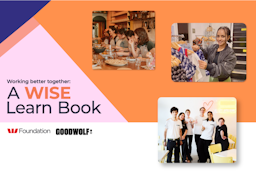
Dismantle case study (page 3)
Case studiesGovernance breakdown, frozen funding pipelines, and a lost premises hit simultaneously. This work integration social enterprise (WISE) case study follows Dismantle's CEO and board as they navigated near-insolvency, and what they learned about financial capability, funder relationships, and leadership fatigue.
Learn more
-1.png)
We’d love to hear from you!
Understorey is shaped by the people and organisations across Australia. Have suggestions, ideas or resources to share? Get in touch and help us make Understorey more useful, relevant and accessible for everyone.
Get in touch