5 Aug 2025
Impact-led design 2.0
By Kevin Robbie and Marty Bortz (Think Impact)
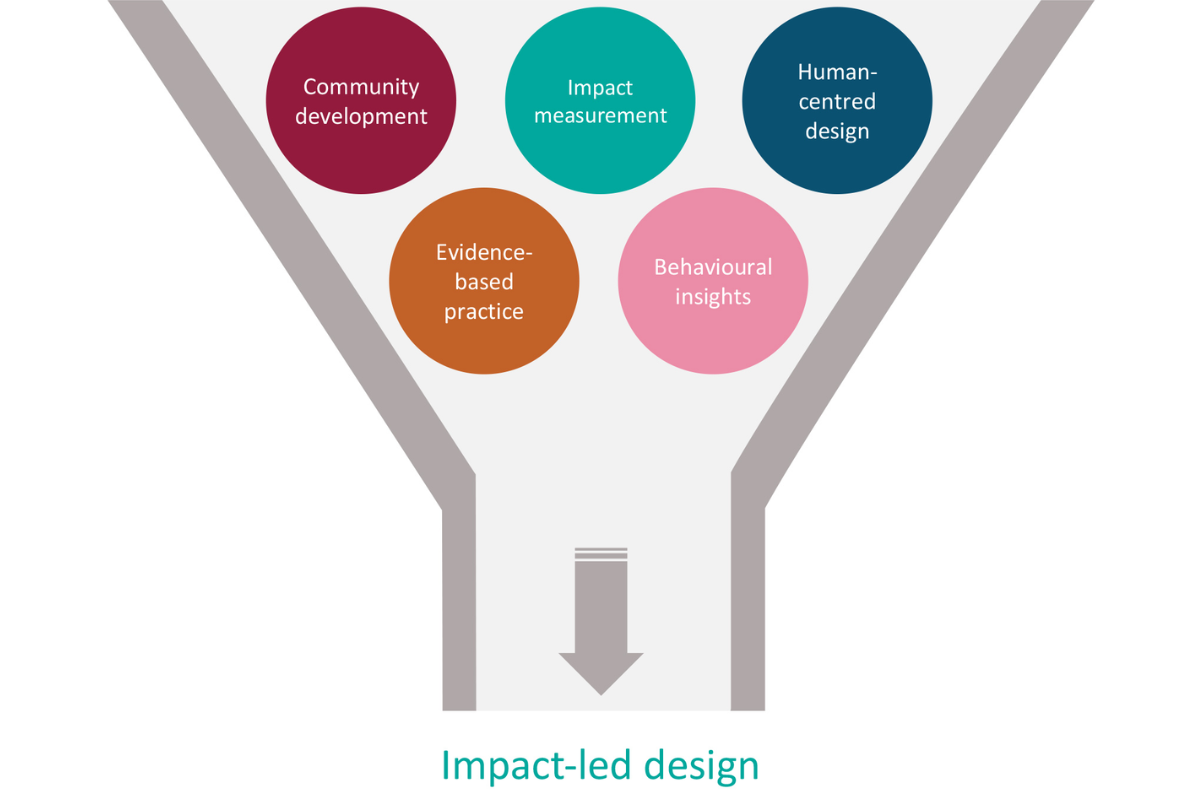
Impact-led design 2.0 is a way to create programs and projects that are built around the change we want to see, not just around funding or activity. It uses evidence, lived experience, co-design and systems thinking to make solutions stronger and more effective across sectors such as government, philanthropy, business and not-for-profits.
View resourceSummary
This resource from Think Impact explains how impact-led design 2.0 helps organisations design work that makes a real difference, rather than starting with funding or activities first. Think Impact developed the original impact-led design method about a decade ago by combining good practices from impact measurement and co-design. The updated “2.0” version reflects lessons from using the approach across many contexts and sectors including business, government, philanthropy and not-for-profit organisations.
Impact-led design starts by being clear about the change desired. It draws on evidence about what works, involves people affected by the issue in designing solutions, and brings together partners, communities, experts and funders in a shared process. This helps avoid common problems such as designing services just to fit funding rules or excluding people with lived experience from planning.
The article describes how impact-led design works at different levels. It can help shape new initiatives or improve existing ones by grounding them in shared understanding and evidence. It can also help whole organisations align mission, strategy and practice around long-term impact rather than short-term tasks. In place-based settings, the approach supports groups to work together around a common vision, map systems and adapt as they learn.
Impact-led design 2.0 emphasises a set of core principles that guide the work: focusing first on outcomes for people and systems, involving people with lived experience, thinking in terms of whole systems, using data and evidence and testing and adapting as needed. The updated approach also highlights the importance of strong partnerships across sectors and the role of a learning partner who helps teams reflect, gather insights and improve their work over time.
This article shows that impact-led design 2.0 is a structured but flexible way of developing solutions that are better connected to real needs and likely to achieve lasting social impact. It is useful for anyone involved in social innovation, service design, strategy planning or collaborative change efforts.
We’d love to hear from you!
Reach out to one of our team members, and share input and ideas about how we can evolve Understorey.
Get in touch