1 Jan 2026
Inclusive social innovation for hospitality employment
By Madalyn A. Scerri, Anita Manfreda, Rajka Presbury, Andrea Comastri.
This research explores how a disability-inclusive social enterprise in hospitality can create meaningful jobs and lasting social change. Using Hotel Etico as a case study, it shows how inclusive design, strong relationships and co-creation with people with disability can transform workplaces, attitudes and employment systems.
View resourceSummary
This article examines how inclusive social innovation can improve employment opportunities for people with disability in the hospitality industry. The authors focus on Hotel Etico, Australia’s first social enterprise hotel designed to provide paid work, training and pathways into open employment for young adults with disability.
The hospitality industry employs millions of people worldwide, yet people with disability are often excluded due to rigid job structures, fast-paced environments and narrow expectations about customer service. The authors argue that standard diversity and inclusion policies are not enough. Deeper changes are needed in how work is organised, supported and valued.
Using interviews and observations with trainees, staff, leaders, families and industry partners, the study shows that inclusive social innovation works best when it is embedded into everyday operations, relationships and organisational culture. At Hotel Etico, people with disability are not only employees. They actively help shape how the organisation works. Training is personalised, support is flexible and trainees have genuine choice and responsibility in their roles.
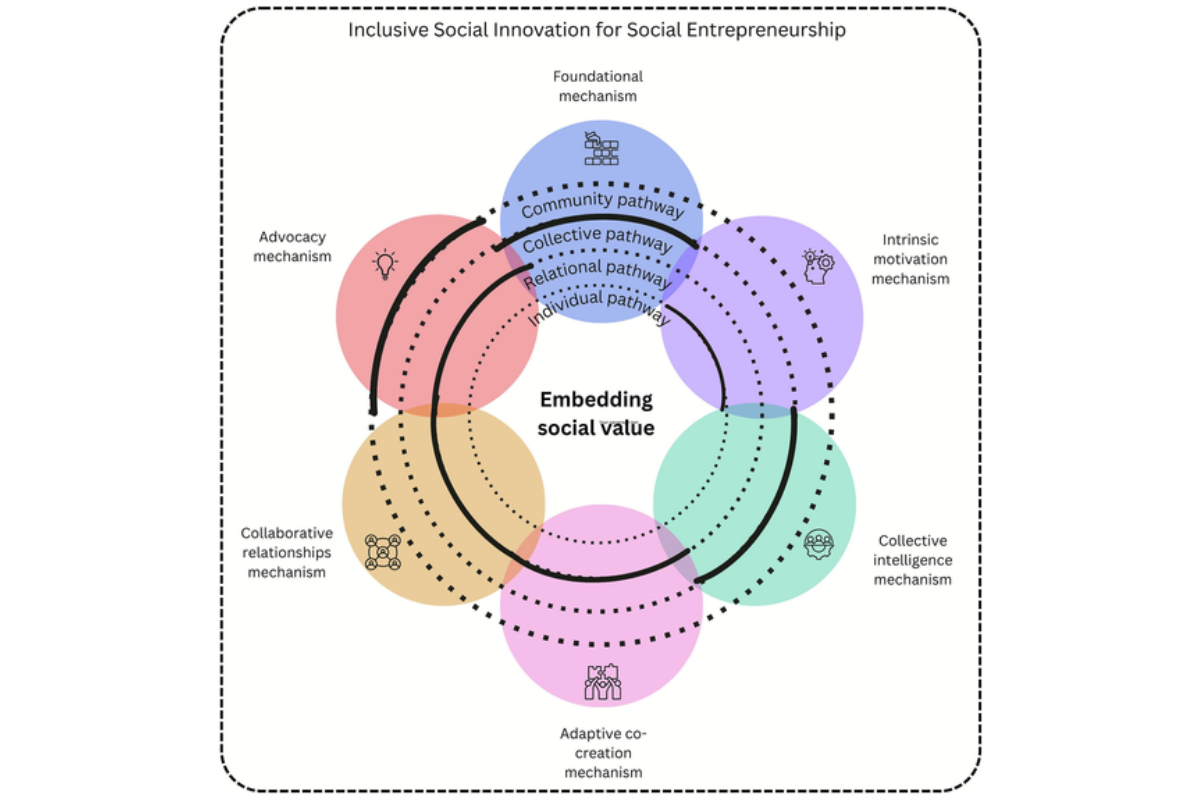
The research identifies six key mechanisms that support inclusive social innovation:
- A clear social mission focused on dignity, independence and paid employment.
- Strong personal motivation among staff who share inclusive values.
- Collective intelligence that combines hospitality expertise with disability support.
- Co-creation, where people with disability help design their own training and work.
- Collaborative relationships with families, guests, employers and industry.
- Advocacy that challenges stereotypes and promotes broader systems change.
Together, these mechanisms create pathways for change at individual, organisational and community levels. The study shows that when people with disability are recognised as capable contributors, workplace culture improves, staff attitudes shift, and employers gain confidence to hire inclusively.
This article is relevant for social enterprises, employers, policymakers, and educators interested in inclusive employment, co-design and systems change. While the case study is based in hospitality, the insights are applicable to many industries seeking to build fairer and more inclusive workplaces.
-1.png)
We’d love to hear from you!
Understorey is shaped by the people and organisations across Australia. Have suggestions, ideas or resources to share? Get in touch and help us make Understorey more useful, relevant and accessible for everyone.
Get in touch