29 Nov 2024
First Nations Principles for Social Enterprise Development
By Shifting Ground
Shifting Ground held an interactive webinar with agents of social change representing a cross-section of First Nations social enterprises and businesses. It explored the principle: "If you can get right what you do in relation to First Nations people, your work with all people and communities will benefit."
Summary
This was the inaugural Open Learning webinar hosted by Social Enterprise Australia as part of the Australian Government's Social Enterprise Development Initiative (SEDI). Convened by Shifting Ground, the session brought together almost 100 participants from across the social enterprise sector to explore a provocation that shaped the entire conversation:
"If you can get right what you do with First Nations people, your work with all people will benefit."
The session was facilitated by Dr Lilly Brown (CEO of Magabala Books and co-founder of Shifting Ground, a proud Gumbaynggirr woman) and Genevieve Grieves (co-creator of storytelling agency GARUWA and co-founder of Shifting Ground, a proud Worimi woman).
Contributors included:
- Prof Deen Sanders (Worimi), Lead Partner at Deloitte, regulatory and governance expert, leading ethicist, and cultural man
- Rona Glynn-McDonald (Kaytetye), founding CEO of Common Ground and co-founder of First Nations Futures
- Dr Blaze Kwaymullina (Palyku), business owner, entrepreneur, writer, and chairperson of Emu Nest Investment Group
The session was opened by the Honourable Andrew Leigh, Assistant Minister for Competition, Charities, Treasury and Employment, who acknowledged the importance of First Nations perspectives to the social enterprise sector and the Albanese Government's commitment to seeing social enterprises thrive.
Why this conversation matters
Genevieve Grieves opened by naming a shift that has been building across Australia over the past 30 years, from what she called "a great Australian silence" to a deep desire for connection with First Nations peoples and cultures. But she was honest about the limits of that shift: acknowledgments of country, reconciliation action plans, and First Nations staff being brought into organisations don't always reflect genuine power sharing, wealth redistribution, or a real understanding of First Nations ways of doing, being, and knowing.
"I don't think there's actually a deep understanding of how we do things or our ways of doing, being, and knowing."
Genevieve pointed to the climate crisis and ongoing global challenges as a moment of opportunity: a growing recognition that Western extractive systems are failing, and that First Nations knowledge systems offer something the world urgently needs.
Deen Sanders went further, challenging the deficit framing that often underpins how the sector thinks about First Nations people. The social enterprise sector, like so many others, can unconsciously frame Indigenous communities as problems to be solved. Deen rejected this entirely.
"There is no problem with our people. The problem lies with you people. The problem isn't the 3%; the problem is the 97%."
He shared the words of the late Kimberley Elder David Mowaljarlai, from his book Yorro Yorro: that First Nations peoples have a gift they have been trying to give this country for 240 years, and have continually been blocked from giving it, by politics, media, and law. The gift is pattern thinking. The gift is knowledge. The invitation is for the sector, and the country, to finally receive it.
Learnings and insights
- First Nations knowledge is not supplementary, it is foundational
First Nations ways of being are not additions to be bolted on to existing frameworks. They are the foundation. As Deen said, economics, complexity theory, leadership, and governance all come from Country. "Country is our teacher."
- Business is a kinship network and a ceremonial practice
Blaze offered a reframe of what business actually is. Drawing on Palyku philosophy, he described a business as a kinship network: a collection of human beings who come together to create and distribute value through practices of reciprocity. The economic component, the part that sticks above the waterline, is just a fraction of a business's true value. Social, cultural, spiritual, and relational value sits beneath the surface, often invisible, but always present.
"Business is a ceremony. It's a cultural practice. That is the horse that pulls the cart."
He identified four guiding principles for a healthy kinship network: autonomy, accountability, belonging, and trust. Each offers a lens for how social enterprises might think differently about the organisations they are building.
- Reciprocity is an economic system
Rona brought this to life through a story from her childhood: watching her father give money to an elder who came to the door, then immediately call his sister to ask if she had anything to spare. Reciprocity, as she learned it, is a practice of balance. When you receive energy or benefit, you redistribute it, knowing that collective care will hold you in return.
This principle, she argued, is absent from Western economics. It was absent when she studied economics at the University of Melbourne, and it remains largely absent from the funding and philanthropy systems that social enterprises navigate.
"None of the capital forms of measurement really centred on cultural capital or knowledges."
Her organisation, First Nations Futures, is working to change this, developing models that use co-investment language deliberately, recognising that everyone living on this continent has a role in redistribution.
- Storytelling is systems change
Rona also named something important about how systems shift: they are made up of people, and the mindsets and beliefs of those people drive the outcomes. Since colonisation, the dominant stories on this continent have centred non-Indigenous voices, aspirations, and knowledges. Shifting those systems requires shifting the storytelling that underpins them. Common Ground was founded on exactly this principle.
- The sector needs better bridges, not just better practitioners
Blaze closed with a structural observation: Aboriginal entrepreneurship and social enterprise are like two railroad tracks running side by side, with very few crossing points. This is not just a problem between sectors; it exists within them too. Representative bodies and institutional networks need to do the harder work of knitting these spaces together, so that individual practitioners, who are already stretched, are not left to carry it alone.
- Where to start: Country
When asked where to begin, multiple contributors gave the same answer: Country. Sit on it. Listen to it. Be present in it. Come and yarn. As Deen said, "you're sitting on Country, and it is the teacher."
Show notes and quotes
On the gift being offered: "All we want to do is come out from under all of this and give you this gift. The gift of pattern thinking, the gift of our knowledge. We've been trying to give it to this country for 240 years but have been unable to do so."- Prof Deen Sanders, citing the late David Mowaljarlai, Yorro Yorro
On deeper change: "What I'd really like to see is not just surface accommodation or tokenism but deeper reckoning with our ways of doing, being, knowing, and incorporating them into a new system that's more about shared work, shared responsibility, and making ethical and just change."- Genevieve Grieves
On reciprocity: "When you receive energy or benefit, you redistribute that benefit knowing that in collective care, in collective community, you'll always be held. That's how our communities function at their best."- Rona Glynn-McDonald
On reframing the problem: "We need to rewrite the entire framework. It is about rewriting economics, rewriting politics, rewriting business to recognise that Indigenous knowledge and wisdom is in fact the answer to the problem. We are not the problem; we are the answer to the problem."- Prof Deen Sanders
On the philosophy of business: "Your reason for being is to receive, create, and distribute value through kinship networks, through practices of reciprocity, in a way that sustains people and Country."-Dr Blaze Kwaymullina
On taking action: "The way I was taught by my elders is that this is collaborative work; we can't do it alone, we have to do it together."- Genevieve Grieves, citing Uncle Jim Berg, Koorie Heritage Trust: "GNOKAN DANNA MURRA KOR-KI, Give me your hand, my friend."
On belonging: "Every decision we make in our businesses asks whether this will increase or decrease belonging."- Dr Blaze Kwaymullina
On Country as teacher: "Sit there by yourself and listen for the language of economics in the systems around you. Look at what those ants are doing; look at what that tree is doing. That's what our economics is about, how everything grows, how everything stands up alive when you pay attention to the relationships in the system."- Prof Deen Sanders
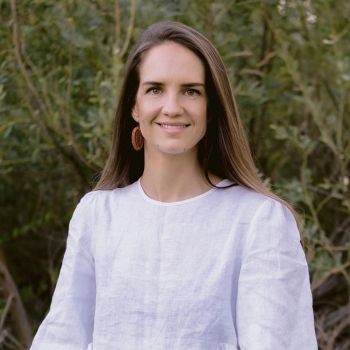
Dr Lilly Brown
Educator, facilitator and researcher
Magabala Books
Dr Lilly Brown is an educator, facilitator and researcher who has worked across the not-for-profit, government, corporate, arts and culture, and education sectors on racial literacy and cultural safety. With a Masters degree in education from the University of Cambridge and a doctorate in youth studies from the University of Melbourne, Lilly’s work is informed by her relationships and work with communities and young people across Australia. She belongs to the Gumbaynggirr people of the mid-north coast of New South Wales and lives on the lands of the Yawuru and Jugan people in Rubibi (Broome). Lilly is the CEO of Magabala Books, the leading Indigenous-owned and controlled publisher on this continent.
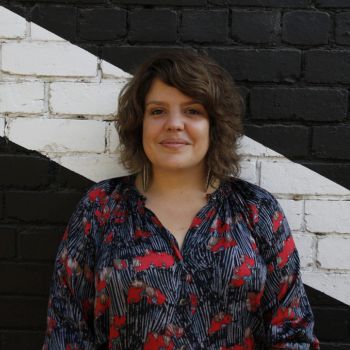
Genevieve Grieves
Co-Creator and Creative Director
GARUWA
Genevieve Grieves is a proud Worimi woman and respected artist, curator, educator, field builder, film director and oral historian. She is recognised as a leader of community engagement and decolonising methodologies in Australia. Genevieve is the Co-Creator and Creative Director of storytelling agency, GARUWA, where she champions projects that place First Nations knowledge and culture at the core.
-1.png)
We’d love to hear from you!
Understorey is shaped by the people and organisations across Australia. Have suggestions, ideas or resources to share? Get in touch and help us make Understorey more useful, relevant and accessible for everyone.
Get in touch